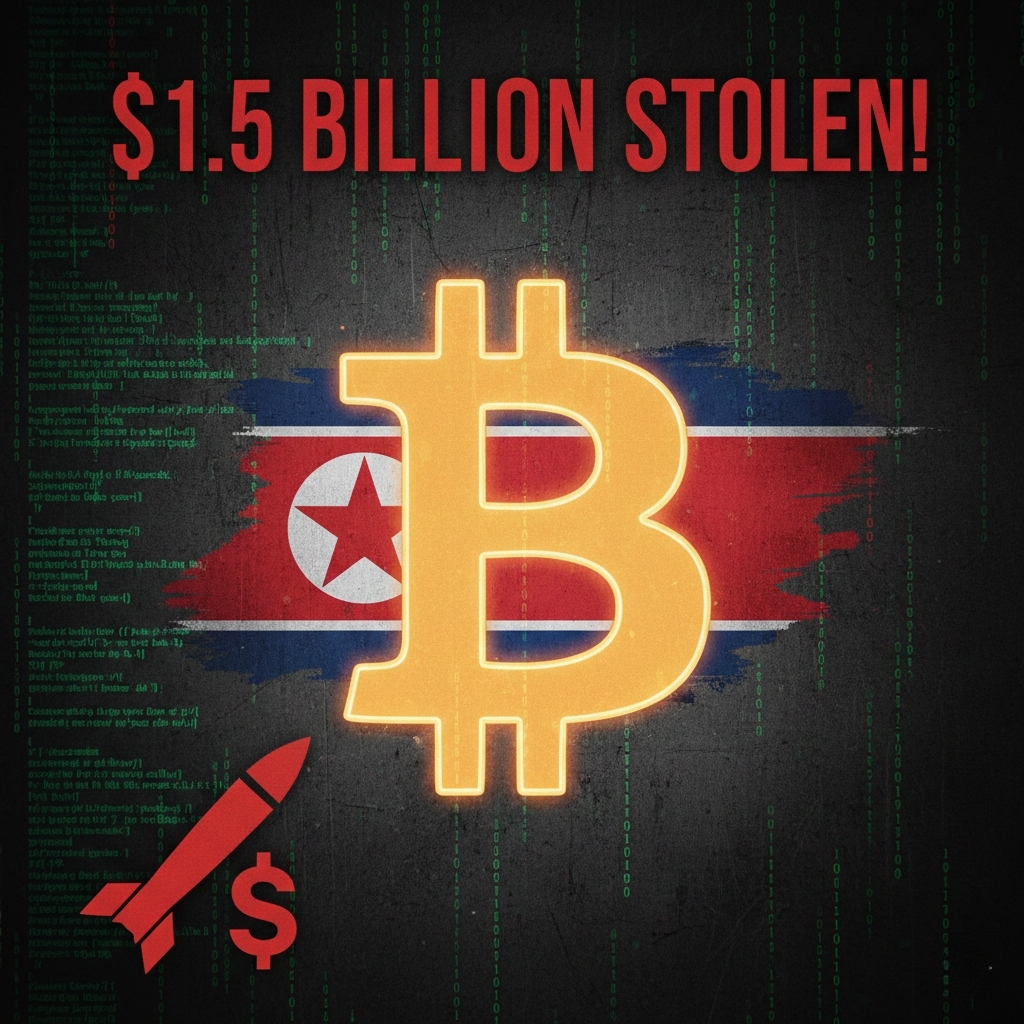
The Digital Vault Raiders: How North Korea’s Hackers Fund a Nation’s Ambitions
Introduction
In the opaque world of international cyber warfare, one nation consistently stands out not for its technological innovation, but for its relentless and highly effective cyber larceny: North Korea. Isolated by crippling international sanctions, the Democratic People’s Republic of Korea (DPRK) has turned its focus to the borderless realm of cryptocurrency, transforming state-sponsored hacking into a massive, lucrative, and essential funding stream for its nuclear and ballistic missile programs. This is not mere opportunism; it is a calculated, strategic economic policy executed by elite hacking units, most notably the infamous Lazarus Group.
This article delves into the “how” and “when” of North Korea’s digital heists, detailing the sophisticated methods they employ to breach security and the massive amounts of Bitcoin and other virtual assets they have stolen, culminating in some of the largest cryptocurrency thefts in history.
The Architect of Digital Crime: The Lazarus Group
The central entity behind nearly all of North Korea’s significant cyber operations is the Lazarus Group, also known by monikers like APT38 or TraderTraitor. Operating under the umbrella of the DPRK’s primary intelligence agency, the Reconnaissance General Bureau (RGB), the Lazarus Group is a well-oiled machine of digital warfare and financial crime. Unlike typical criminal gangs, their motivation is not personal enrichment but state-mandated fundraising to sustain the Kim regime and finance its weapons development, effectively circumventing global sanctions.
Their focus has evolved over time. Initially targeting banks with the audacious $81 million Bangladesh Bank heist in 2016, they quickly pivoted to the burgeoning cryptocurrency market, where lower regulation and the decentralized nature of the assets offered both high rewards and a complex trail for investigators to follow.
The “How”: North Korea’s Hacking Playbook
North Korean hackers do not rely on a single method but employ a sophisticated, multi-layered approach that targets the weakest link in the security chain: people and software vulnerabilities.
1. The Social Engineering Onslaught
The most consistent tactic is the use of social engineering and phishing campaigns. Hackers spend months gathering intelligence on high-value targets—employees at cryptocurrency exchanges, venture capital firms, or even individual high-net-worth investors. They then craft highly convincing, personalized phishing emails or direct messages, often using LinkedIn, Telegram, or Discord.
Job Offer Lures: They frequently pose as recruiters from reputable firms, sending a “job application” or “coding test” that is, in reality, a malicious file containing custom-designed malware.
Supply Chain Attacks: They compromise third-party software or tools that a crypto firm uses (a “supply chain”), infecting the system before it even reaches the exchange’s main servers. This was a suspected method in the largest known hacks.
Impersonation: For breaches targeting exchanges, hackers often compromise administrative accounts, impersonating legitimate administrators to authorize huge, illicit transfers out of the exchange’s wallets.
2. The Exploitation of Software Flaws
While social engineering is a primary entry vector, they also excel at exploiting technical vulnerabilities, particularly in Decentralized Finance (DeFi) protocols and cross-chain bridges. These platforms, which move assets between different blockchains, often contain technical flaws that can be exploited to drain the linked crypto funds. Notable examples include the Ronin Bridge hack (March 2022), where they stole over $600 million by compromising validator nodes, which are essential for approving transactions.
The “When”: A Timeline of Major Heists
While North Korea is linked to dozens of hacks annually, several stand out for their sheer scale, demonstrating a worrying escalation in capability:
| Date (Approx.) | Victim/Target | Stolen Asset/Value | Key Takeaway |
| May 2017 | WannaCry Ransomware | ~$4 Billion in total losses, demanded Bitcoin | Global ransomware attack, established Lazarus’ notoriety. |
| Nov 2019 | Upbit (South Korea) | ~342,000 ETH (approx. $40 million at the time) | A clear example of targeting South Korean exchanges using administrator account compromise tactics. |
| Mar 2022 | Ronin Bridge (Axie Infinity) | ~$620 Million in ETH and USDC | The largest DeFi hack in history, demonstrating their pivot to exploiting cross-chain bridge vulnerabilities. |
| Feb 2025 | ByBit Exchange (Alleged) | ~$1.5 Billion in Ethereum (ETH) | The largest single cryptocurrency theft in history, widely attributed by the FBI to a North Korean sub-group, TraderTraitor. |
Note: The $1.5 billion ByBit hack in Feb 2025 is the most recent and significant incident, often cited by US and international agencies.
The Laundering Labyrinth: Turning Crypto into Cash
Stealing the funds is only half the battle; converting the digital assets (like Ethereum or Bitcoin) into usable fiat currency to fund the state is the ultimate objective. This process, known as money laundering, is where their operation becomes especially complex.
Conversion: Stolen assets are immediately converted into less-traceable cryptocurrencies, particularly Bitcoin (BTC), using Decentralized Exchanges (DEXs) and cross-chain bridges to obscure the original source of the funds. The FBI specifically noted that in the ByBit heist, the hackers were “rapidly converting” the stolen Ether into Bitcoin.
Mixing/Tumbling: The funds are then funneled through cryptocurrency mixers (like the now-sanctioned Sinbad or Blender.io). These services blend stolen crypto with clean funds from numerous sources, making it nearly impossible to follow a single transaction trail.
Cashing Out: The final step involves cashing out the ‘clean’ crypto into fiat currency, often utilizing over-the-counter (OTC) brokers, obscure exchanges, or networks of middlemen in various countries.
Conclusion: A Perpetual and Evolving Threat
North Korea’s state-sponsored crypto hacking is more than just a security threat—it is a national security issue. Chainalysis, a blockchain analysis firm, estimates that North Korean-linked hackers have stolen billions of dollars since 2017. These funds are directly channeled to advancing the regime’s military capabilities, making every successful hack a setback for global efforts to contain the DPRK’s nuclear program.
As law enforcement agencies and blockchain analysts become better at tracking the stolen funds, the hackers continuously adapt, shifting from traditional centralized exchanges to newer, often less-secure DeFi platforms, and employing more sophisticated social engineering tactics. The perpetual digital cat-and-mouse game against the Lazarus Group is a chilling reminder of how a rogue state has found a powerful, sanction-proof path to financial survival in the digital age
